Everybody loves the view from the top of the highest mountains on the planet. There is nothing better than that feeling of achievement when you reach the summit, and you can justify the pain of getting there.
This article describes 8 of the best mountains to climb, all of them difficult, but all totally achievable if you have a decent amount of stamina. These mountains don’t need climbing gear, and are trek-able for any fit hiker. Please stay safe, and seek local guidance if you decide to take a trip out to these.
Mount Kosciuszko – 2,228m – Australia
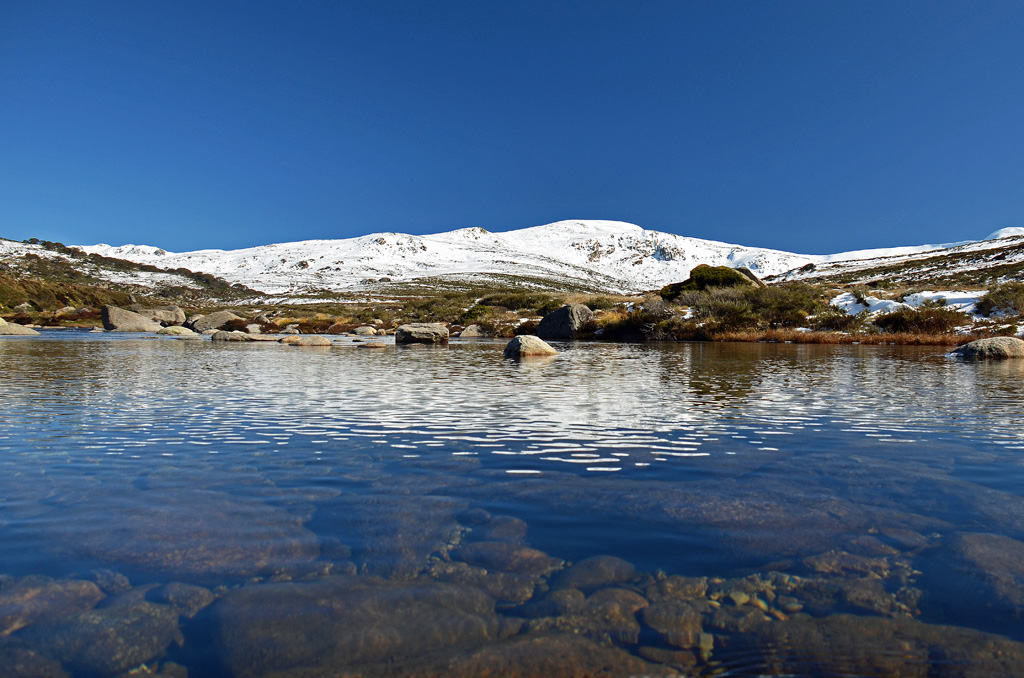
Located on the Main Range of the Snowy Mountains in Kosciuszko National Park in New South Wales, Australia, this mountain is one of the easiest in the world to ascend, mainly due to the Thredbo Kosciuszko Express chairlift which takes climbers to within 303m height of the summit. Anybody with a modest level of fitness can take the chairlift and then walk 6.4km to the top within a few hours. This is the easiest of all the Seven Summits of the world.
If you are looking for more of a challenge there is a cycling route from Charlotte Pass which takes you within 1.4km of the top. There is also a very challenging and historic Hannel’s Spur Track from the NW which passes through four different bio-diversity bands along the ascent. This is Australia’s biggest vertical ascent of 1800m, and is the same route which the explorer Paul Strzelecki used to climb and discover the mountain in 1840.
Mount Fuji – 3,776m – Japan

Mount Fuji is one of the world’s most recognisable and historical peaks. It is an active volcano which last erupted in 1708, situated 100km southwest from Tokyo, Japan. It is considered a holy site in Japanese culture, and the summit was forbidden to women until the late 1860s.
Today the ascent has four major choices of route. Each ascent route is well sign-posted, with different ‘stations’. There is vehicle access to each of the fifth stations, and the routes ascend up to the summit which is the tenth station.
The most popular route is the Yoshida route because of the large parking area and the number of large mountain huts to spend the night. The ascent from the fifth station can take around 7 hours, with the descent 3-4 hours and it is encouraged to take two days over the entire trek.
The climbing season is from June to September, with ascents from October to May being strongly discouraged. Most Japanese themselves climb the mountain at night in order to be at the summit at sunrise.
Jbel Toubkal – 4,167m – Morocco

Toubkal is the highest peak in the Atlas Mountains, Morocco, and is located 63km south of the city of Marrakesh. It is one of the most popular mountain objectives in the Atlas Mountains. Trekkers usually approach from Marrakesh through the village of Imlil. Guides are required due to various unseen hazards, but otherwise it is a moderate trek for the relatively fit hiker.
This mountain doesn’t have the easy access to the summit of some of the others, so it is a 2-3 day trek through the foothills and up to the summit and back. The first day is spent hiking to the mountain refuge or base camp at 3,207m. The second day is a four hour ascent to the summit and three hours back down to the refuge. A very fit hiker might want to continue back to Imlil at this point, but usually that five hour descent is saved until the third day.
The ascent requires decent mountain hiking boots and wind-proof clothing. Trekking poles may be useful, but the ascent itself is non-technical, making this an ideal choice for a fit mountain-hiker with relatively little experience.
Mauna Kea – 4,207m – Hawaii

Mauna Kea is a dormant volcano on the US island of Hawaii. It is the highest peak on Hawaii, and the tallest mountain on the planet from base to summit (although 6km of its total height is underwater, so the summit is not the highest, as we all know).
The last time the volcano erupted is thought to be over 4600 years ago, although in centuries to come it may erupt again, making this volcano dormant rather than extinct. The native Hawaiians revered the volcanoes on Hawaii as sacrd mountains, and this greatest of the five is the most sacred of them all. As a result ancient laws restricted access to the summit to only the highest ranking leaders of their religion.
Today the mountain is used for a variety of purposes, from grazing of sheep and cattle, military training, archaeological research, and, perhaps most notably, astronomical observation. The summit is one of the best sites in the world for observation due to favourable weather conditions and the location close to the equator, as well as the lack of light pollution maintained by law.
There is an access road to the telescopes at the summit, making this possibly the most accessible summit. There is also a 9km offroad trail which leads almost to the summit, joining with the access road 1km from the top.
Mount Kilimanjaro – 5,895m – Tanzania

Another dormant volcano, this time in Tanzania, Kilimanjaro is the highest mountain in Africa and the highest free-standing mountain in the world (Mount Everest is supported at the base by the Himalayan Mountain range, which reduces the free-standing height). The summit is 4,900m above its plateau base in the Kilimanjaro National Park.
This mountain is much more physically demanding than the ones above, requiring acclimatization for the altitude and a high level of fitness. Only around 60% of climbers succeed in reaching the summit, and 77% of climbers experience acute mountain sickness. Having said this, even if you don’t reach the summit, the trekking around the mountain is highly rewarding for its own sake.
The Marangu route is the most popular, being one of the easiest options (relatively), and has accommodation in shared huts en-route. Treks generally take around 6-8 days, depending on the route chosen.
Chimborazo – 6,268m – Ecuador

Chimborazo, positioned as it is on the Earth’s ‘bulge’ around the equator, has a summit which is the farthest point on the surface away from the Earth’s centre, and therefore the closest to the sun that anybody can get while remaining on the surface of the planet. This mountain is a double volcano, made up of one volcano on top of another. The volcano is a stratovolcano, meaning that the slope of the sides gets steeper the further up the mountain you go.
It is a popular climb, and there are no off-seasons for this mountain. With acclimatisation and basic glacier-hiking skills this summit can be reached without any special techniques. It is highly recommended to use a local guide to avoid potentially hazardous rock falls. The summit takes 2 days to climb and return, plus a further 10 days of acclimatisation and approach to the foot.
Mera Peak – 6,476m – Nepal

Situated in the Himalayas this peak gives 360 degree panoramic views of some of the highest mountains in the world – Mount Everest being one of them. It is a relatively straightforward ascent to the main summit, althought the altitude makes acclimatisation essential to avoid altitude sickness. Climbers should be relatively fit, but no major prior experience is needed with guided ascents being recommended.
The standard route from the north takes you over high-altitude glaciers and takes three days to take in the trekking summit. The true summit of the peak requires a rope climb and is much more technically demanding.
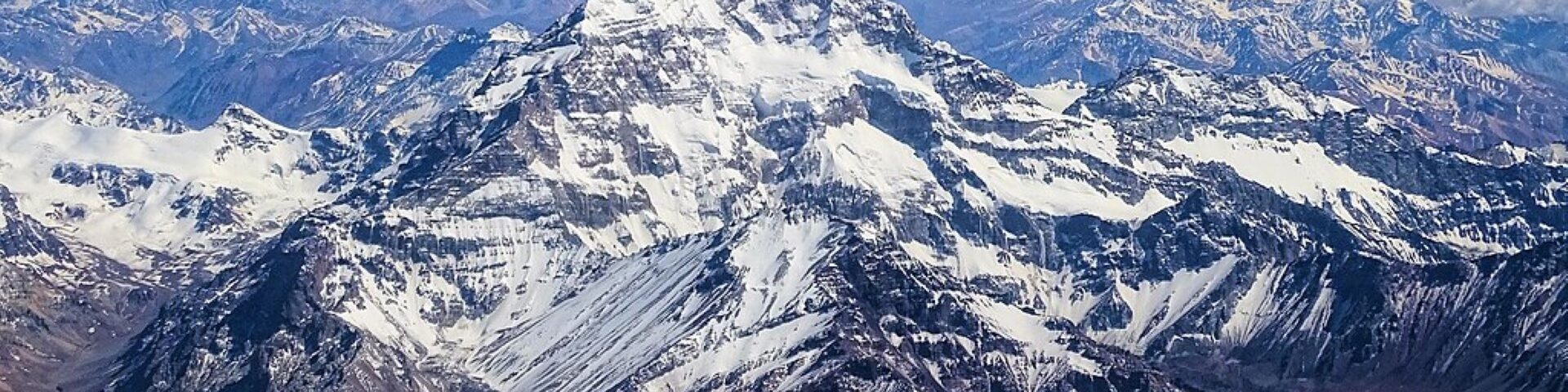
Aconcagua – 6,962m – Argentina

The highest summit in North or South America, and, in fact, the highest outside of Asia. It sits 112km northwest of the city of Mendoza in Argentina, and is just 15km from neighbouring Chile. Aconcagua has a number of glaciers, including the largest Ventisquero Horcones Inferior which is 10km long.
The mountain is the highest non-technical mountain in the world, since the normal route does not require climbing equipment. It does require acclimatisation to reduce the risk of altitude sickness. The mountain is commonly underestimated by climbers who succumb to the cold weather at the extreme elevation.
The climb is a long one, with a five-day trek both to and from Base Camp, plus a further week of climbing to achieve the summit via the North Ridge and return to base camp. This isn’t one for the unfit mountaineer – it is the toughest trekking summit on the planet, with only 40% of climbers succeeding to the summit.
My husband and i ended up being absolutely comfortable when Michael could do his homework because of the ideas he acquired out of the web site. It is now and again perplexing to simply find yourself handing out guidance which usually a number of people could have been trying to sell. And we all consider we now have the blog owner to be grateful to for this. The type of explanations you have made, the simple site navigation, the friendships you can assist to engender – it’s many wonderful, and it’s really helping our son and our family understand the subject matter is entertaining, and that is very important. Many thanks for all the pieces!
I’ve read some good stuff here. Definitely worth bookmarking for revisiting. I surprise how much effort you put to make such a wonderful informative site.