If you’ve progressed up to the Bronze Age, and you’ve upgraded your armour and weapons enough that you feel able to take the next step, then this guide is for you. The next stage up in Valheim is the move to the Iron Age, with new materials, armour, weapons, bosses, and biomes to explore.
Advancing to the Iron Age
The Iron Age is the period of the game in which you collect scrap iron and use it to forge improved weapons and armour. You have access to a new cooking station, and you can improve your workbench and forge. You can also create a stonecutter station for the first time.
To begin the shift into the Iron Age you need to defeat the second boss, the Elder. When you have cut him down to size you will get a Swamp Key, which allows you access to the sunken crypts found in the swamps. Sunken crypts are home to Draugr, Blobs and variants thereof, and are unhealthy and uncomfortable places to be. These are the main sources of scrap iron which you will collect and smelt for iron ingots.

Swamps
For Valheim players searching for enough iron to create full armour sets, the swamps will become a second home. They are dangerous places and you should try to have a decent set of bronze or troll armour before venturing in. A bronze mace is good against skeletons, blobs and oozers. Draugr can be taken down with a finewood bow from a distance. Other useful items would be poison resistance mead, the Megingjord Belt, and of course the swamp key!
Swamps are dark and damp places. Visiting Vikings will mainly be wet and cold, and stamina will suffer as a result. There are lots of large trees, often lying on the ground between deep pools of murky water. Travellers through swamps will need to jump and swim for a large proportion of their journey. Leeches lurking in the water and blobs and oozers jumping from pool to pool will all inflict poison attacks on the player. Draugr and skeletons will use bows or edged weapons against you. Wraiths are uncommon, and are relatively simple to kill with ranged weapons. Surtlings will also spawn in the swamp, and use fire as an attack. Recovery of stamina is slow in the swamp, so it is important to be economic with movement and attacks, particularly when surrounded by numerous enemy as will commonly happen.
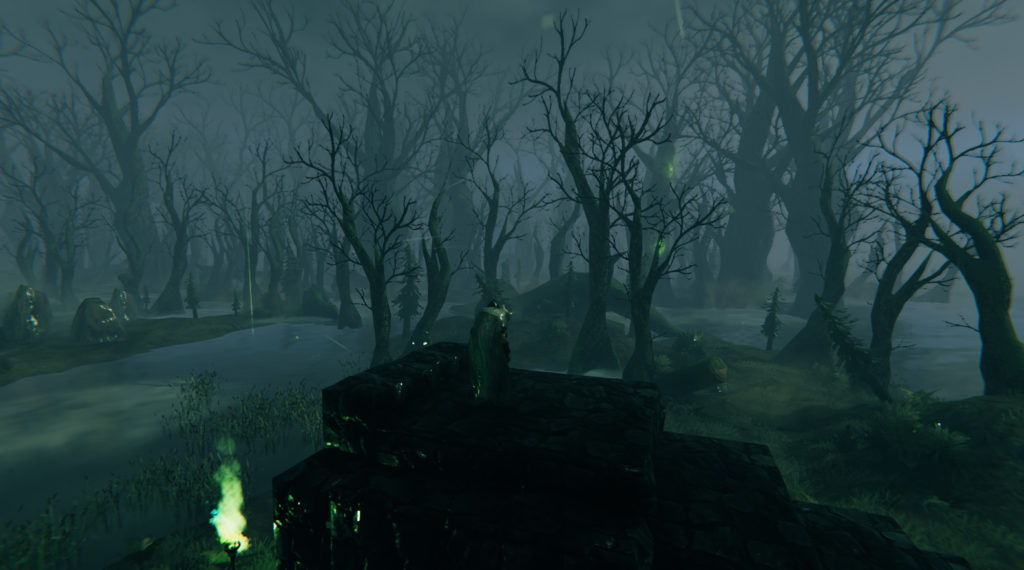
Sunken Crypts are common in the swamp, but there are few other useful buildings. There are some mysterious stone spiral staircases which plunge into the water and are inaccessible, and there are abandoned houses on stilts within the swamp which can spawn Wraiths at night. To access a Sunken Crypt you will need to be carrying a swamp key. The swamp key is not destroyed on use, so you only need one. The sunken crypts will not re-lock either, so you only need the key once and any team member can be the one that opens it.
Swamps may not be found on your spawn-point’s island, so it may be necessary to build a Karve to sail further afield in search of the nearest swamp. It can be wise to take a portal – firstly to provide a rapid means of returning to your swamp to collect resources, and secondly to provide rapid escape if necessary. Note that iron scraps cannot be transported by portal, which means that you will need to secure land or sea travel back to your base.
Acquiring Iron

Iron is obtained from scraps of iron by smelting. The iron scraps can be found in muddy scap piles within sunken crypts. These massive piles of scrap are mined using a pickaxe and will provide iron scraps, leather scraps, and withered bones (needed to summon Bonemass).
When you have collected your fill of iron scraps you will need to carry it back overland (no portal will teleport these) to your smelter where you can smelt it back down into Iron Bars. These are used in the same way as Bronze Bars to make weapons, tools and furniture.
Iron Age Tools
Tools that can now be crafted include the Iron Axe and Iron Pickaxe, a large step up from the Bronze variants. The Iron Pickaxe can also be used to mine Silver and Obsidian when the need arises.
New weapons are the Iron variants of most types, including Ancient Bark Spear, Iron Atgeir, Iron Mace, Iron Sledge, Iron Sword. Each of these is an improvement on the Bronze variant. The Huntsman Bow is now available, as are the Ironhead Arrows. For the first time a two-handed axe is available – the Battleaxe. There is also an improved shield available for each size – the Iron Tower Shield or the Banded Shield.
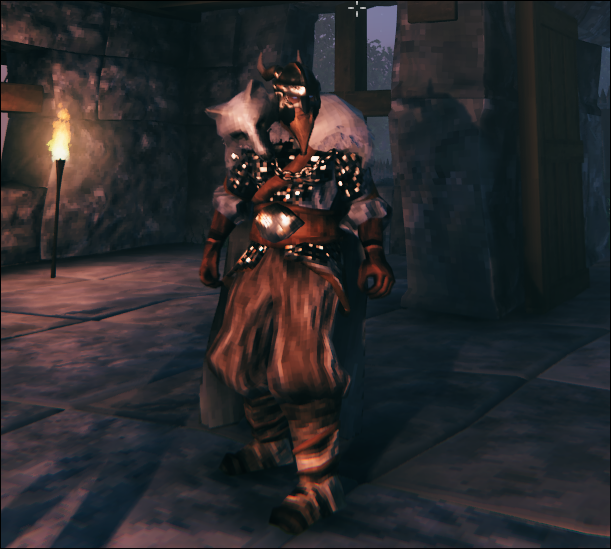
A set of iron armour is now craftable. The Iron Helmet, Iron Scale Mail and Iron Greaves each require deer hide and huge amounts of Iron. There is no cape at this level.
You can also upgrade your Forge dramatically with the Smith’s Anvil, Forge Toolrack, Forge Bellows and Grinding Wheel all becoming available during the Iron Age. The Workbench is technically possible to upgrade too with the Tool Shelf, although this involves venturing up into the mountains for Obsidian, which is covered in our next guide.
Resources in the Iron Age
Once you’ve got a supply of Iron you can craft the Iron Cooking Station, which is just an improved version of the Cooking Station which you made when you first set out on your adventure. It sits above an Hearth or two campfires, and allows up to 5 pieces of meat to be cooked at a time. The larger cuts such as Lox meat and Serpent require this Iron Cooking Station to cook, and as these are two of the better foods in the game you will be looking to upgrade as soon as you can.
To craft an Iron Cooking Station you will need 3 Iron Bars and 3 Chain. Chain is found in Sunken Crypts in chests for the most part.

Food that is unlocked in the Iron Age is Cooked Serpent Meat and Cooked Lox Meat (using the Iron Cooking Station), and then Serpent Stew which follows on. Lox Meat Pie and Blood Pudding is possible, but it is unlikely that you have conquered the Plains in order to plant barley until a little later on in the game. Sausages are made from the entrails of fallen Draugr (alongside thistle and raw boar meat), so it is likely that you will now have a steady source of these. Black Soup is made from Bloodbags, which are the remains of the swamp’s Leeches, alongside honey and turnip.
Other resources now available are Ancient Bark, which opens up some new tools plus the huge advancement, the Viking Longboat.
Gucksacks and Guck are also found in the Swamp, and are useful in many recipes involving Iron.
There are also a huge number of new building options, including iron beams and stone. The Hearth is now buildable as an improved campfire, and paved roads can be laid.
Iron Age Challenges
The major challenge at this phase in the game is survival in the Swamp. You will also want to start roaming around the mountains and plains at this stage, although they will be quite tough for a little while. It is now that you will begin to sail much further away from your home island as well as you have access to the much faster and tougher Viking Longship.
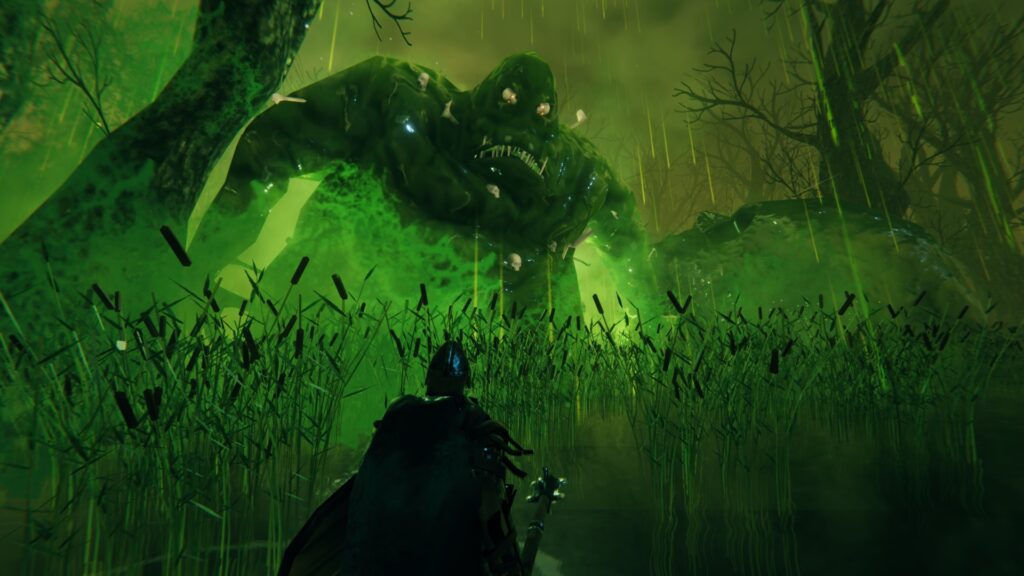
Enemies are much stronger now and they will start to present difficulties with poison damage and possibly frost as well. You will need to get on board with Mead production in order to counter these. You may have got by up to now with an edged or pointed weapon, or even a bow to cut down all your enemies. The strange creatures in the swamp are ideally attacked with a blunt weapon such as a mace, so you may need to re-visit your skills and training on this.
A lot of recipes now require vegetables for the more efficient and effective foods. You will want to have a working farm for carrots, turnips and onions as soon as possible.
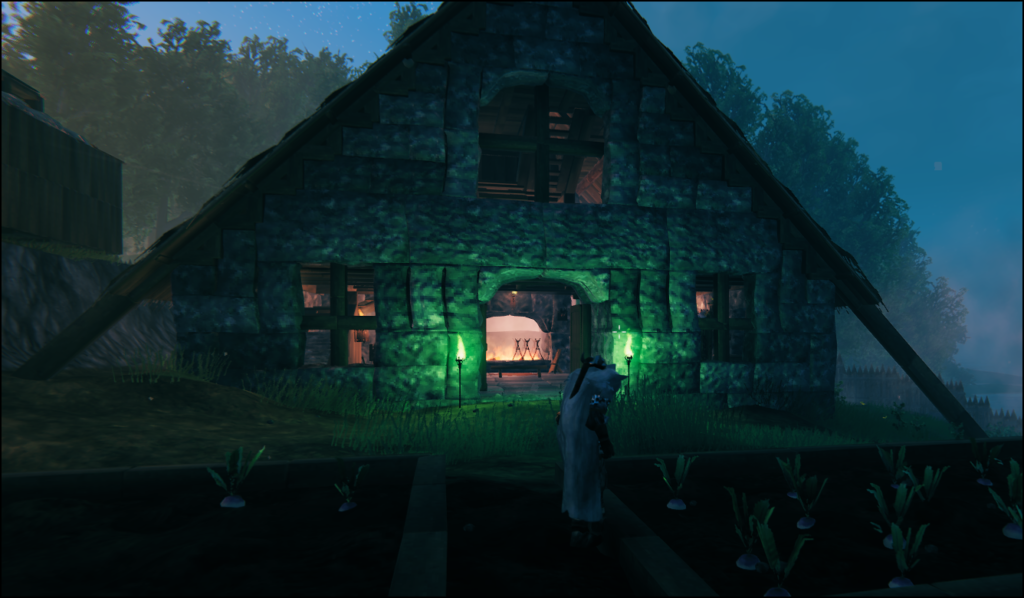
Your base is now liable to be invaded by Draugr and Skeletons as you sense “A foul smell from the swamp” coming over you. This event is triggered by the death of the Elder, so watch out for it.
Next Step: Silver Age
There is a lot to do in the Iron Age, and a lot of equipment to acquire. When you are strong enough you will want to progress further by taking on the next boss, Bonemass. If you succeed then you will be able to search for Silver in the Mountains and improve your equipment yet again. Good Luck!